


Magazine
A guide to choosing a natural yellow diamond

A natural yellow diamond is not special simply because it is rarer or more eye-catching than a colourless diamond. More and more people choose one because it offers something entirely different. It is elegant yet individual, distinctive without feeling overstated, and timeless enough to be treasured for generations.
For most people, diamonds are synonymous with colourlessness. For decades, we've been taught that the whiter a diamond appears, the rarer and more valuable it is. Nature, however, doesn't always follow the same rules.
With a natural yellow diamond, the very characteristic that would lower the value of a colourless diamond is precisely what makes it extraordinary: its colour.
At first glance, this may seem contradictory, but these are two entirely different categories of diamonds. Traditional white diamonds are graded on the GIA D-to-Z colour scale, where the absence of colour determines rarity and value. Natural fancy colour diamonds, on the other hand, are prized for the richness, purity and individuality of their colour.
For that reason, a natural yellow diamond should never be assessed in quite the same way as a colourless one. Different qualities take centre stage, different priorities emerge, and even the design process follows a different path.
Why are some diamonds yellow?
Like every natural diamond, a yellow diamond is a crystal of carbon formed deep within the Earth's mantle under immense heat and pressure millions of years ago. The difference lies in just a few atoms.
As the crystal forms, small amounts of nitrogen can become incorporated into its atomic structure. These nitrogen atoms absorb part of the blue spectrum of visible light, allowing the yellow component of the light to become visible.
The science behind the process is complex, but from a buyer's perspective, one fact matters most: the colour is not added afterwards. In a natural Fancy Yellow diamond, the yellow hue is an inherent part of the crystal itself. It formed naturally during the diamond's creation, just like its hardness and crystal structure.
Not every yellow diamond is a Fancy Yellow Diamond
This is one of the most important distinctions to understand. Many diamonds display a subtle yellowish tint. This is perfectly natural and forms part of the colour grading system for colourless diamonds. As you move down the GIA D-to-Z scale, progressively warmer tones become visible. That does not, however, make these diamonds fancy colour diamonds.
Natural yellow diamonds belong to an entirely different category. Once the colour reaches a level where it becomes the diamond's defining characteristic rather than simply a slight tint, the GIA no longer grades it on the D-to-Z scale. From that point onward, it is evaluated within the Fancy Color grading system.
The distinction is significant because two diamonds that appear broadly similar at first glance may differ substantially in value depending on whether they are graded as colourless diamonds with a yellow tint or as natural fancy colour diamonds.
Colour is the defining characteristic
When buying a colourless diamond, most people quickly become familiar with the 4Cs: carat weight, colour, clarity and cut. Together, they determine a diamond's overall quality and value. With natural yellow diamonds, the balance shifts.
Colour becomes the defining characteristic. What matters is not simply whether the diamond is yellow, but how vivid the colour appears, how evenly it is distributed throughout the stone, and whether secondary hues are present.
For this reason, the GIA uses a separate grading system for fancy colour diamonds rather than the D-to-Z scale. The most commonly encountered grades include Fancy Light, Fancy, Fancy Intense and Fancy Vivid Yellow.
As a general rule, richer and more saturated yellow colour commands greater rarity and value. That said, the strongest colour grade is not automatically the right choice for everyone. A soft Fancy Yellow diamond conveys a very different character from a richly saturated Fancy Vivid Yellow. Just as there is no universally perfect carat weight or diamond shape for colourless diamonds, choosing a yellow diamond is ultimately a matter of personal preference and the piece of jewellery you want to create.
Cut plays a very different role
The primary objective when cutting a colourless diamond is to maximise brilliance and light return. Precise proportions allow the diamond to reflect as much light as possible, making cut one of the most important elements of the 4Cs.
Natural yellow diamonds introduce another priority: colour.
The cutter's task is not only to maximise brilliance, but also to preserve and enhance the diamond's natural yellow hue. Achieving that balance often calls for different proportions than those used for colourless diamonds.
This is why certain diamond shapes are particularly well suited to yellow diamonds.
Radiant cuts are especially admired for combining exceptional brilliance with strong colour saturation. Cushion cuts can beautifully emphasise the warmth of the stone, while oval and pear shapes create elegant, elongated proportions that complement coloured diamonds particularly well.
That is not to say round brilliant yellow diamonds do not exist. Beautiful examples can certainly be found, particularly in the stronger colour grades. They are simply less common, as many fancy shapes are better at preserving and showcasing the natural body colour of the diamond.
Clarity matters differently, too
When buying a colourless diamond, many people instinctively look for the highest possible clarity grade. With natural yellow diamonds, however, experts tend to prioritise the characteristics differently.
The reason is straightforward. A rich yellow body colour naturally disguises tiny internal features more effectively than a colourless diamond does. As a result, a natural yellow diamond with a VS clarity grade — or even an SI diamond that appears completely eye-clean — can still display exceptional beauty.
That doesn't mean clarity becomes irrelevant. If inclusions are visible without magnification or interfere with the passage of light through the stone, they will inevitably affect its appearance. In most cases, however, the personality of a natural yellow diamond is defined far more by the richness of its colour than by whether its clarity grade is one level higher or lower.
For that reason, choosing a diamond with stronger colour and excellent overall visual appeal is often a better decision than selecting a paler stone simply because it carries a higher clarity grade.
Carat weight isn't the whole story
Larger diamonds are always rarer, and yellow diamonds are no exception. As carat weight increases, it becomes progressively more difficult to find stones that combine beautiful, evenly distributed colour with good clarity and an expertly executed cut.
Even so, comparing yellow diamonds by size alone can be misleading. In many cases, a one-carat Fancy Vivid Yellow diamond is considerably rarer — and more valuable — than a larger Fancy Light diamond with noticeably less saturated colour. In the world of fancy colour diamonds, colour intensity is every bit as important as size.
This is why specialists never judge a natural yellow diamond by a single characteristic. The goal is always to find the right balance between colour, cut, clarity and carat weight, allowing each quality to complement the others.
Rare, yet wonderfully varied
Natural fancy colour diamonds are among the rarest gemstones on Earth, and within this remarkable group, yellow diamonds are the most frequently encountered colour. That does not mean they are common.
Stones with vivid, evenly distributed natural colour remain exceptionally scarce. As colour saturation increases, availability decreases dramatically, which is why Fancy Intense and especially Fancy Vivid Yellow diamonds attract the attention of collectors as well as buyers looking for truly exceptional jewellery.
Rarity, however, should never be viewed in isolation. The value of a yellow diamond ultimately lies in the way nature and craftsmanship come together. Its colour, proportions, cut and finishing combine to create a character that is entirely its own.
The setting is just as important as the diamond
When choosing a yellow diamond, it is only natural for attention to focus on the stone itself. Yet the very same diamond can take on a noticeably different character depending on the setting that surrounds it.
The reason is simple. Diamonds reflect not only light but also the colours around them. Because the prongs and the setting sit directly beside the stone, the colour of the precious metal influences how we perceive the diamond itself.
For yellow diamonds, the setting is therefore much more than a design choice. It is an integral part of the overall composition.
If the goal is to emphasise the warmth and richness of the natural yellow colour, a yellow gold setting can enhance those golden tones. If greater contrast is desired, white gold or platinum provides a clean, neutral backdrop that allows the diamond's colour to stand out even more vividly.
There is no universal formula that suits every yellow diamond. The ideal setting always depends on the individual stone — its colour, saturation, shape — and the overall aesthetic you wish to achieve.
Why can similar yellow diamonds vary so much in price?
This is one of the questions we hear most often during a personal consultation. Two yellow diamonds of similar size and seemingly similar colour can vary dramatically in price.
One important reason is that not every yellow diamond owes its colour entirely to nature.
Some natural diamonds undergo treatments designed to modify or intensify their colour. The best-known methods include High Pressure High Temperature (HPHT) treatment and various irradiation processes, both of which can produce colours that were not originally present in the stone.
It is important to understand that these treatments do not automatically make a diamond undesirable. The crucial point is transparency. A treated-colour diamond and a natural Fancy Yellow diamond belong to two distinct categories, with different market values and long-term significance.
What you can't see with the naked eye
A GIA coloured diamond grading report does much more than record the intensity of a diamond's colour. It also states clearly whether that colour is natural or the result of treatment.
That distinction has a direct impact on both value and buyer confidence.
When investing in a natural yellow diamond worth thousands — or even tens of thousands — of euros, the certificate is far more than an administrative document. It is one of the most important pieces of information that accompanies the stone, providing independent verification of exactly what you are purchasing.
How should you choose a natural yellow diamond?
Choosing a natural yellow diamond is a nuanced process. The most exceptional stones are those where colour intensity, cut, clarity, carat weight and setting work together to create a jewel that captures attention effortlessly.
That is why it rarely makes sense to base your decision on carat weight — or any single characteristic — alone. Two yellow diamonds of identical size can have entirely different personalities depending on the richness of their colour, the quality of their cut and the precious metal that surrounds them. A laboratory grading report provides an invaluable point of reference, but the final impression always comes from the way these elements come together.
One of the greatest qualities of natural yellow diamonds is their individuality. No two stones share exactly the same shade, making the selection process far more personal than it is with colourless diamonds. What one person sees as the perfect rich golden yellow may feel too intense to someone else. Some are drawn to softer, more delicate tones, while others are captivated by the bold presence of a Fancy Vivid Yellow diamond.
A beautiful diamond should also be authentic
When investing in a gemstone of this significance, confidence in its authenticity is just as important as its appearance.
Natural origin, independent laboratory certification and transparent professional guidance all contribute to making an informed decision. A natural yellow diamond accompanied by a GIA grading report offers objective confirmation of both the stone's natural colour and its key quality characteristics, allowing buyers to make their choice with complete confidence rather than relying on assumptions.
The beauty of a yellow diamond lies in the details
At Moni's Diamond jewelry store, a personal consultation goes well beyond reading the information on a grading report. We also consider how each diamond performs in different lighting conditions, which setting best enhances its natural colour and how the proportions of the finished piece come together as a whole.
A natural yellow diamond is not special simply because it is rarer or more eye-catching than a colourless diamond. More and more people choose one because it offers something entirely different. It is elegant yet individual, distinctive without feeling overstated, and timeless enough to be treasured for generations.
(Image: Moni's Diamond)
APPOINTMENT BOOKING
Reserve your preferred time slot to enjoy a personalized and unforgettable jewelry design experience. Our experts will focus exclusively on you, ensuring every detail is perfect and every moment feels special.
Booking online: https://www.monis.hu/en/appointment-booking
Booking by phone: +36 70 427 0053
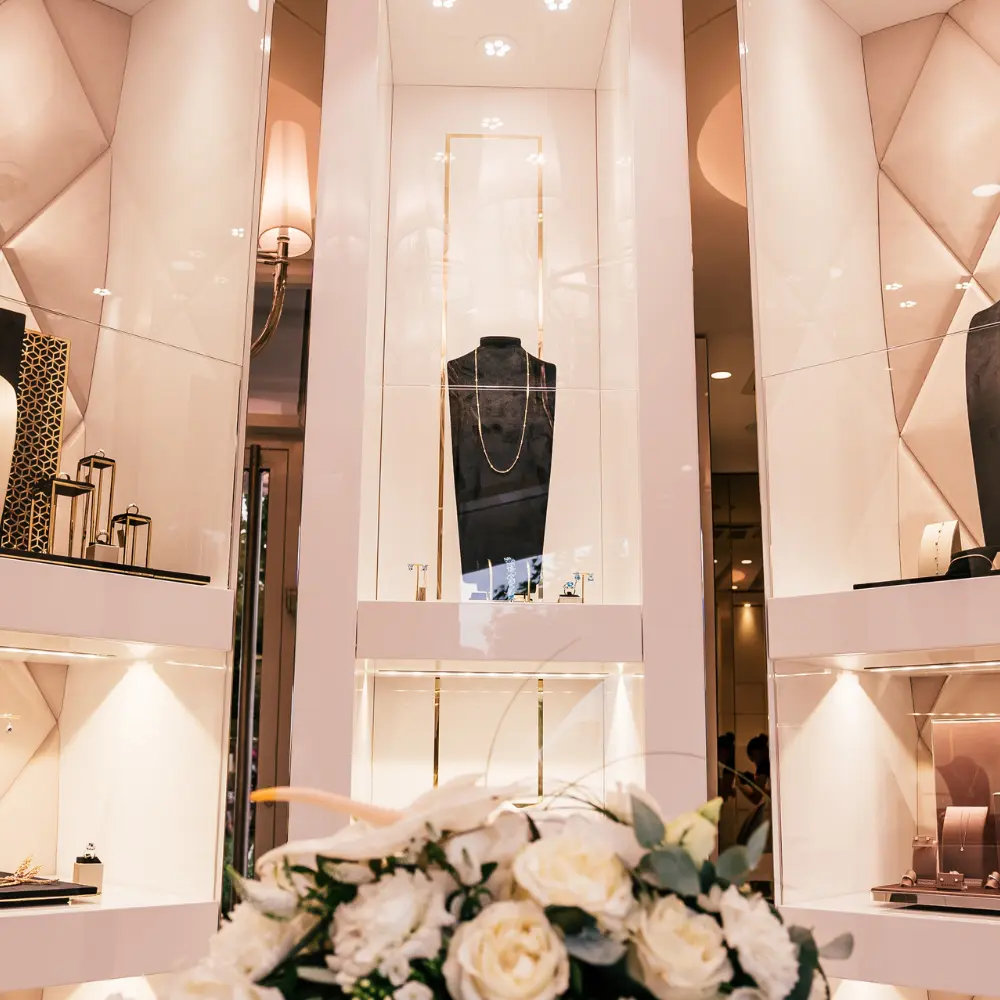
Balatonfüred is more than just a destination – it’s a promise. A place where culture, nature, and refined style come together in perfect harmony along the shores of Lake Balaton. And nestled like a jewel along the iconic Tagore Promenade, you’ll find Moni’s Diamond Boutique – a fine jewelry store that offers far more than just shopping. It is a space where timeless luxury, personal care, and enduring value take center stage.

Located just a few steps from St. Stephen’s Basilica, Moni’s Diamond jewelry store welcomes those who are not simply looking for jewelry, but for meaning, emotion, and timeless value.
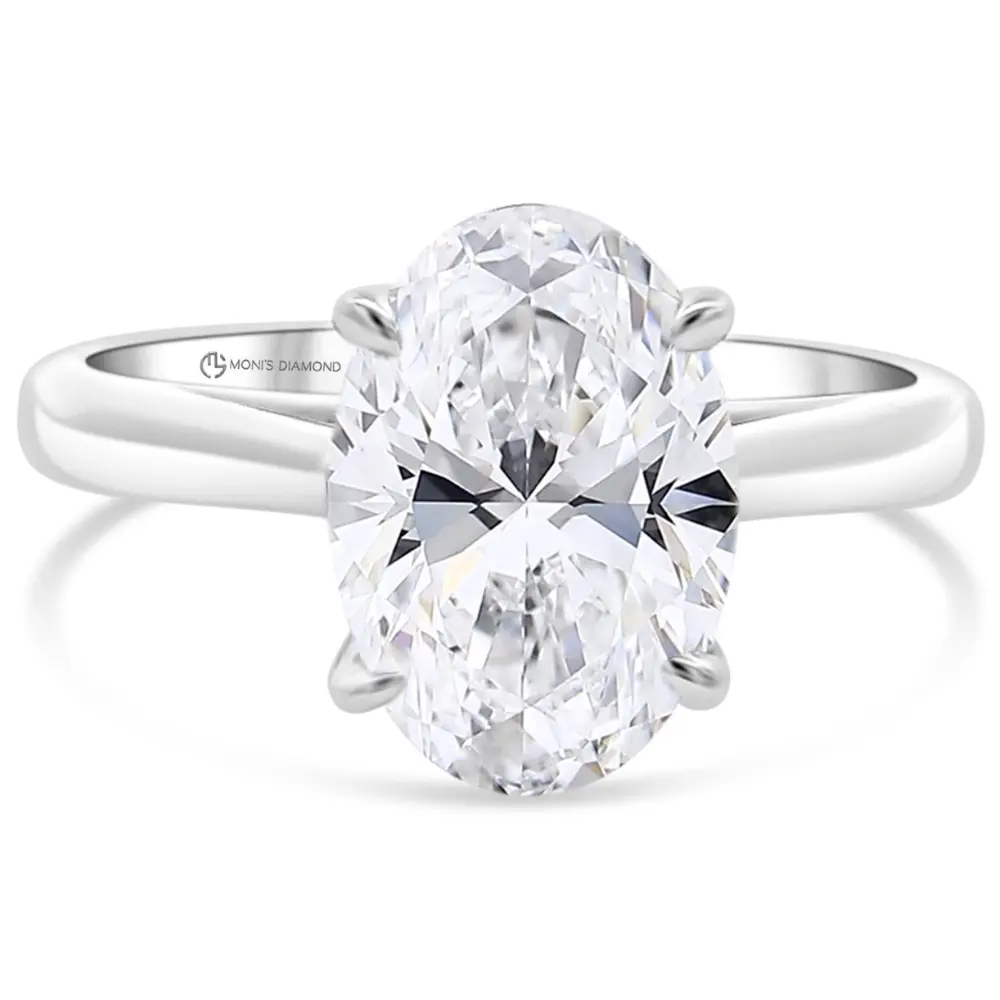
The oval cut diamond is one of the most sought-after shapes, blending the brilliant sparkle of a classic round diamond with a gracefully elongated silhouette. No wonder oval diamond engagement rings have become a favorite among brides worldwide — they flatter the hand by creating the illusion of longer, slender fingers, all while offering dazzling brilliance with every movement.

In our previous article, we explored in detail what diamond clarity truly means and why pursuing a “perfect” grading does not necessarily lead to the most beautiful result. When the choice moves toward a specific diamond engagement ring, however, the next step becomes unavoidable: understanding the international grading systems used to officially assess diamond clarity.

Diamond color is one of the defining elements of the 4Cs and has a direct impact on pricing. Diamonds in the D–F range are classified as colorless and are rarer, which places them in a higher price bracket. As one moves down the scale and a subtle yellow tint becomes present in the stone, prices generally decrease gradually.
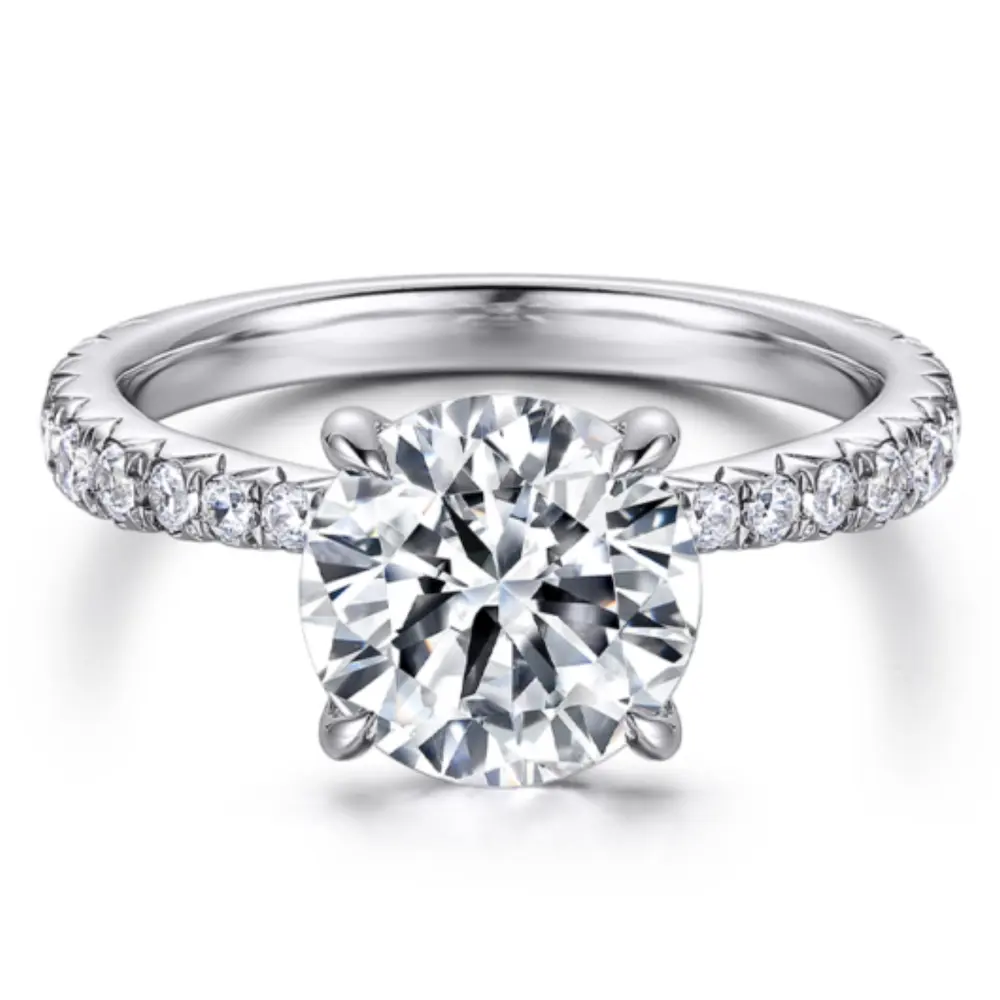
A diamond engagement ring is more than a gift: it’s a promise, a story, and a lifelong keepsake. When a diamond catches the light, it’s not only the stone that sparkles — it’s the emotion it carries. But how do you find the ring that truly stands the test of time? This guide answers every key question.

With the help of Moni’s Diamond jewelry experts, this guide explains what a "brill stone" actually is — and why the brilliant cut remains the most valuable and iconic of all diamond cuts. It walks you through the key steps of choosing a brilliant-cut diamond ring, from understanding the fundamentals to selecting the right style and certification. You’ll also find practical tips for evaluating quality, balancing carat and cut, and ensuring long-term care.
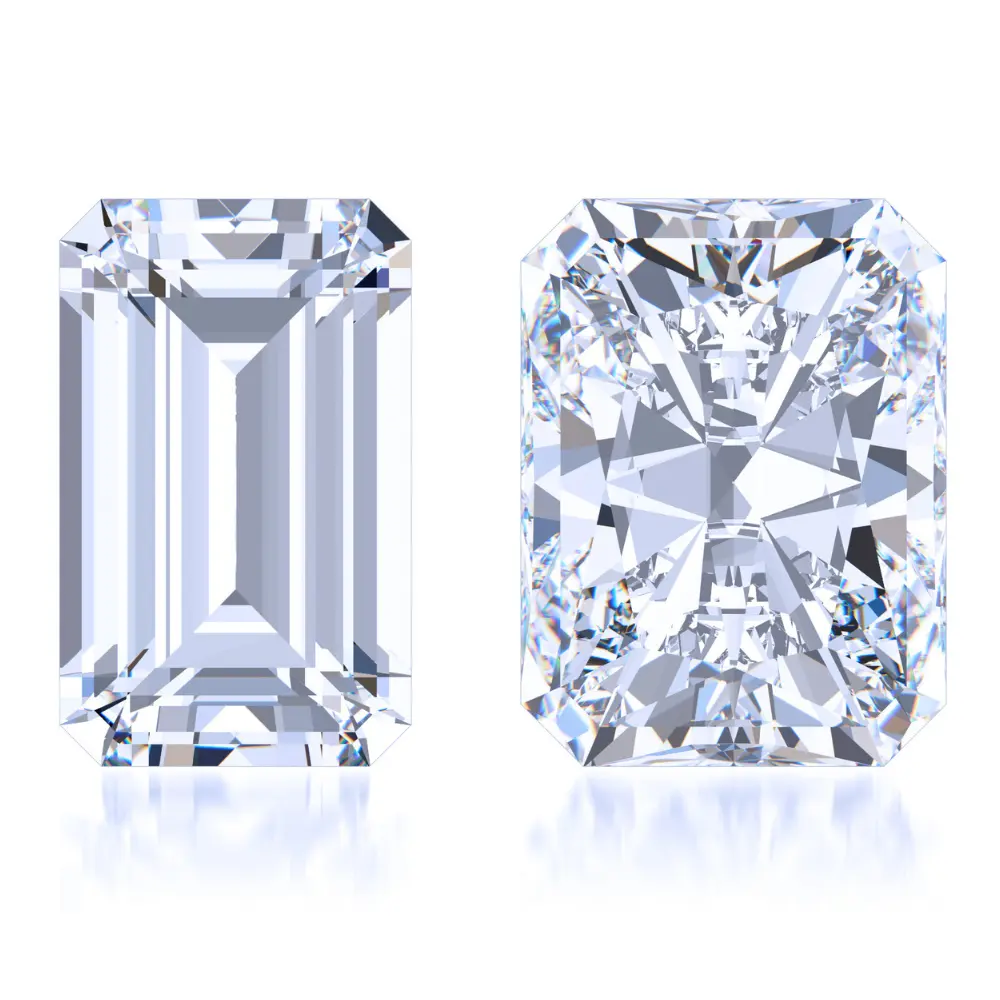
When choosing a diamond engagement ring, the diamond cut is far more than a question of shape. The cutting style determines how light travels through the stone, defines its character, and ultimately shapes the impression the ring conveys when worn. At first glance, emerald and radiant cuts may appear similar — both feature a rectangular outline with clean, refined lines — yet they create distinctly different visual experiences.