


Magazine
Diamond clarity explained: Beyond the certificate

In our previous article, we explored in detail what diamond clarity truly means and why pursuing a “perfect” grading does not necessarily lead to the most beautiful result. When the choice moves toward a specific diamond engagement ring, however, the next step becomes unavoidable: understanding the international grading systems used to officially assess diamond clarity.
In our previous article, we explored in detail what diamond clarity means and why pursuing a “perfect” grading does not necessarily lead to the most beautiful result. When the choice moves toward a specific diamond engagement ring, however, the next step becomes unavoidable: understanding the international grading systems used to officially assess diamond clarity.
In practice, two certification bodies dominate the market, GIA and HRD. While the logic behind their clarity scales is largely similar, there are subtle differences worth knowing, especially when selecting a piece of jewellery intended to last a lifetime.
Why understanding the diamond clarity scale matters
Diamond clarity is not determined by simple visual inspection. The purpose of a certificate is to provide an objective, comparable framework for assessing the size, number, position and nature of inclusions. This framework forms the basis for pricing and for international trade.
That said — and this is a point worth emphasizing from an expert perspective — a certificate does not replace visual judgement. The clarity scale is a professional reference that must be interpreted, particularly when the diamond is destined for an engagement ring setting.
GIA scale, the international benchmark
The grading system developed by GIA is today the most widely accepted global standard. Every diamond is examined under 10X magnification in strictly controlled conditions.
At the top of the scale are Flawless (FL) and Internally Flawless (IF) diamonds, which are exceptionally rare and derive their value primarily from this rarity. They are followed by the VVS (Very Very Slightly Included) and VS (Very Slightly Included) categories, where inclusions are present but extremely small and visible only under magnification. In the SI (Slightly Included) range, inclusions are clearly visible under magnification, yet — when well positioned — may still remain invisible to the naked eye. The I (Included) category refers to diamonds with inclusions that are often eye-visible and may affect either appearance or structure.
HRD scale, European perspective with similar logic
HRD, based in Antwerp — the historic centre of the diamond trade — is also widely recognised across Europe. Its clarity scale closely mirrors that of the GIA, though the terminology differs slightly.
At the highest level, LC (Loupe Clean) corresponds roughly to GIA’s FL/IF grades, followed by VVS, VS, SI, and finally the P (Piqué) categories. The underlying logic remains the same, grading is determined by the quantity, size and visibility of inclusions.
From professional experience, there is no inherent difference between the two systems that would justify favouring one over the other. What truly matters is interpretation.
What does this mean for a diamond engagement ring?
When choosing a diamond engagement ring, the goal is not the most impressive combination of letters on a certificate, but a diamond that appears flawless in everyday wear. For this reason, clarity must always be considered in conjunction with the diamond’s cut — which defines its light performance — the position of inclusions, particularly around the table and central axis, and the intended setting.
In an open, solitaire setting, the interior of the diamond is more exposed, which often calls for a higher clarity grade. A more enclosed or side-protected design, on the other hand, allows inclusions to recede discreetly into the background while preserving uninterrupted brilliance.
In practice, a carefully chosen VVS, VS, or well-positioned SI diamond can appear visually perfect in an engagement ring, while also offering a balanced price–value ratio.
The role of the certificate
The GIA and HRD clarity scales provide reliable, internationally accepted reference points for comparing diamonds. It is important to remember, however, that a certificate is not an aesthetic judgement. These documents offer a professional foundation, but the final decision is always guided by real-world appearance and context. This is where an experienced jewellery and gemstone specialist adds true value — by helping you see the diamond’s character beyond the numbers.
Diamond clarity, then, is not an isolated quality goal, but part of a broader system. It becomes meaningful only when it works in harmony with cut, colour, carat weight and the overall design of the engagement ring.
(Image: Moni's Diamond)
APPOINTMENT BOOKING
Reserve your preferred time slot to enjoy a personalized and unforgettable jewelry design experience. Our experts will focus exclusively on you, ensuring every detail is perfect and every moment feels special.
Booking online: https://www.monis.hu/en/appointment-booking
Booking by phone: +36 70 427 0053

Located just a few steps from St. Stephen’s Basilica, Moni’s Diamond jewelry store welcomes those who are not simply looking for jewelry, but for meaning, emotion, and timeless value.
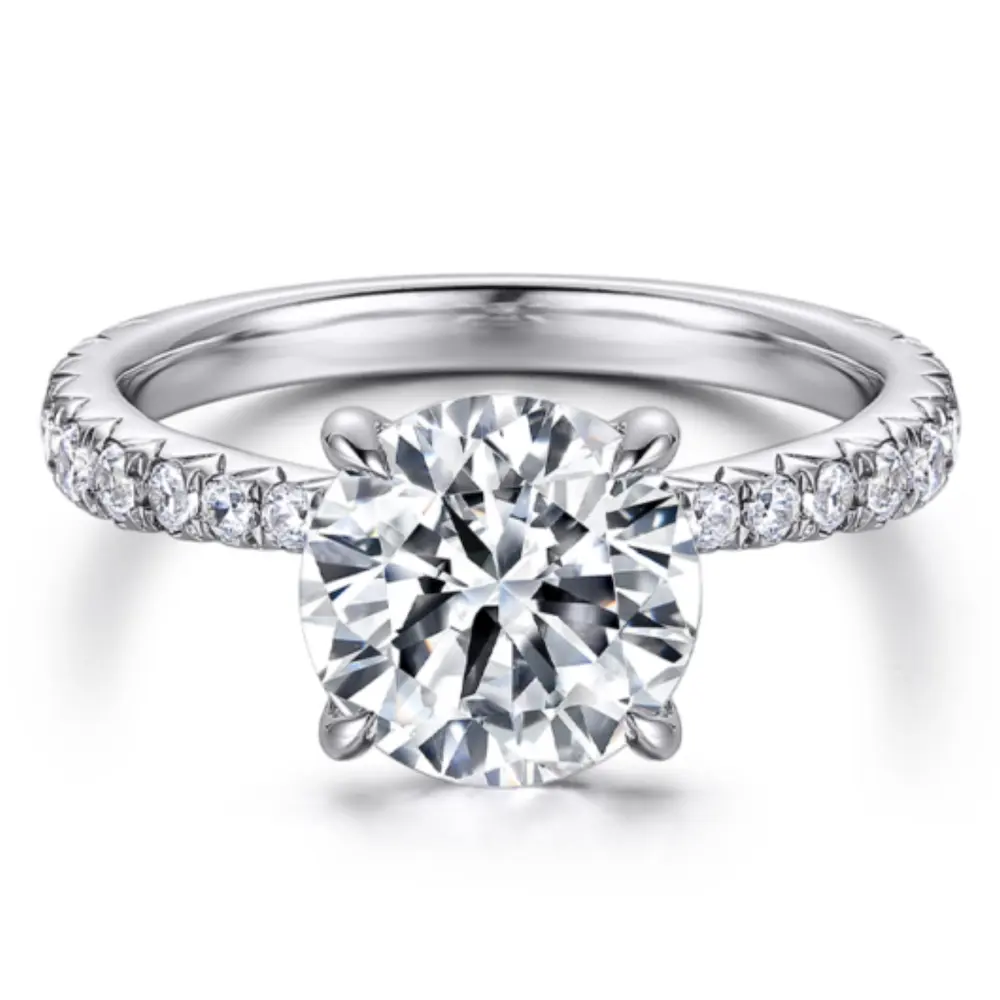
A diamond engagement ring is more than a gift: it’s a promise, a story, and a lifelong keepsake. When a diamond catches the light, it’s not only the stone that sparkles — it’s the emotion it carries. But how do you find the ring that truly stands the test of time? This guide answers every key question.

With the help of Moni’s Diamond jewelry experts, this guide explains what a "brill stone" actually is — and why the brilliant cut remains the most valuable and iconic of all diamond cuts. It walks you through the key steps of choosing a brilliant-cut diamond ring, from understanding the fundamentals to selecting the right style and certification. You’ll also find practical tips for evaluating quality, balancing carat and cut, and ensuring long-term care.

Diamond clarity is one of the most frequently mentioned and at the same time most misunderstood quality characteristics in the world of diamond engagement rings and fine diamond jewellery.