


Magazine
How diamond grading evolved? The history of the 4Cs.

It is difficult to choose a diamond engagement ring today without encountering the 4Cs: Carat, Colour, Clarity and Cut. These four characteristics form the basis of the system used around the world to assess diamond quality.
It is difficult to choose a diamond engagement ring today without encountering the 4Cs: Carat, Colour, Clarity and Cut. These four characteristics form the basis of the system used around the world to assess diamond quality.
The 4Cs, however, are relatively recent compared with the long history of the diamond trade. The term has been in use for just over eighty years. Before then, there was no universally consistent way to describe and compare diamond quality. The introduction of the 4Cs brought much-needed structure to the process. Today, anyone buying a diamond has access to clearly defined information that makes comparison easier, while an independent gemmological grading report describes the stone according to established criteria.
Yet four grades alone cannot tell us everything about a diamond. To interpret them properly, it helps to understand how the system developed, what each category measures and, just as importantly, what falls outside its scope.
Robert M. Shipley and the origins of the 4Cs
The story begins in the United States in the first half of the twentieth century. Robert M. Shipley, a former jeweller, founded the Gemological Institute of America (GIA) in 1931. His aim was to bring greater professional rigour to the study and sale of gemstones through formal gemmological education, consistent terminology and higher standards across the jewellery industry.
In the early 1940s, Shipley began using four terms beginning with the letter C as a teaching aid: Colour, Clarity, Cut and Carat Weight. The 4Cs were not conceived as a complex scientific formula. They were a practical way for students to remember and organise the principal characteristics that contribute to the quality and value of a faceted diamond.
Its simplicity proved effective. The terminology gradually moved beyond the classroom and into the wider jewellery trade, becoming internationally recognised over the following decades.
Naming the four characteristics, however, was only the beginning. For diamonds to be compared consistently, the industry also needed clearly defined methods for assessing each one.
Why does the diamond colour scale begin with D?
One of the most familiar elements of modern diamond grading is the GIA D-to-Z colour scale. At first glance, it may seem unusual that the highest colour grade is D rather than A.
There is a historical reason. Before the GIA system was established, the diamond trade already used various A, AA and AAA classifications, often with different meanings. When Richard T. Liddicoat and his colleagues developed the new system in the 1950s, they deliberately chose a starting point that could not be confused with these earlier classifications. D became the highest grade on the new scale when it was introduced in 1953, as the GIA explains on its website.
The D-to-Z system grades diamonds across the colourless to light-yellow range. D represents the highest colourless grade, with progressively more colour becoming apparent as the scale moves towards Z.
Standardisation involved far more than assigning letters. Consistent grading also required defined viewing conditions, including the lighting and background, the position in which a diamond is examined and the use of master stones with established colour grades for comparison. This is what distinguishes a gemmological grading system from a simple set of descriptive terms.
What does diamond clarity actually mean?
Clarity is perhaps one of the most frequently misunderstood of the 4Cs. Natural diamonds can contain internal inclusions and surface characteristics that developed during their formation or later in their history.
The GIA clarity scale comprises six main categories and eleven individual grades, ranging from Flawless (FL) to Included (I3). During grading, a trained professional examines the diamond under 10× magnification, considering factors such as the size, number, nature, position and visibility of its clarity characteristics.
When buying a diamond, however, it is important to understand that a higher clarity grade does not always translate into a visibly more beautiful stone. The difference between two adjacent clarity grades may be impossible to detect with the unaided eye, while the difference in price can be considerable.
For this reason, choosing a diamond engagement ring is not necessarily about finding the highest possible clarity grade. What matters is understanding where the inclusions are located, how visible they are, whether they affect the appearance of the stone and, in certain cases, whether they raise any durability considerations.
Cut is not the same as shape
Cut is perhaps the most complex of the 4Cs, partly because in everyday conversation the term is often used interchangeably with diamond shape.
Oval, pear, emerald, cushion and marquise describe different diamond shapes and cutting styles. Cut as a quality factor, however, concerns the execution of the diamond’s proportions, symmetry and finish, and how effectively the finished stone interacts with light.
In a well-cut diamond, light entering the stone is returned effectively to the observer. This contributes to the flashes of spectral colour known as fire, as well as the pattern of flashes seen as the diamond, the observer or the light source moves.
The objective assessment of cut quality is the result of decades of research. The GIA’s current Cut Grading System for standard round brilliant diamonds grades cut quality on a scale from Excellent to Poor.
This distinction is particularly important when buying a diamond. Two stones with the same carat weight, colour and clarity can look noticeably different if the quality of their cut is not the same.
Carat refers to weight, not size
Carat Weight is probably the best-known of the 4Cs, yet it is also frequently misunderstood. A carat is a unit of weight: one carat is exactly 0.2 grams.
This does not mean that two diamonds of identical carat weight will necessarily appear the same size. A diamond’s face-up dimensions and visual presence are also influenced by its shape and proportions. A deeper stone may carry more of its weight below the girdle, while another diamond of the same weight may present a larger surface area when viewed from above.
Carat weight alone therefore tells us neither how large a diamond will appear in an engagement ring nor what it is worth. Two 1.00-carat diamonds can differ substantially in price depending on their colour, clarity, cut and other characteristics.
How the 4Cs changed the way we buy diamonds
The lasting importance of the 4Cs goes beyond four terms. They replaced a range of often inconsistent trade descriptions with a framework that both professionals and clients could interpret and compare more systematically.
This remains fundamental to the certified diamond market today. When the centre stone of a diamond engagement ring is accompanied by a grading report from an independent gemmological laboratory, the information it contains provides a detailed basis for understanding the diamond and comparing it with other stones.
A grading report, however, is not a substitute for seeing the diamond itself. The 4Cs separate individual characteristics into categories, while in the stone itself those characteristics exist together. Two diamonds that appear remarkably similar on paper may therefore look quite different in person.
Are the 4Cs enough to choose a diamond?
The short answer is that it is difficult to make a well-informed choice without the 4Cs, but they should not be the only basis for selecting a diamond.
A grading report records the diamond’s principal quality characteristics, but there are other factors worth considering. These may include fluorescence, the particular characteristics of the shape, the stone’s proportions, the location of its inclusions and its appearance under different lighting conditions.
With a diamond ring, there is another consideration: the stone is not being chosen in isolation. Its size and shape need to work with the setting and the proportions of the band, as well as the personal style and hand of the person who will wear it.
What should you look for on a diamond grading report?
The 4Cs provide a useful starting point for reading a grading report, but focusing on one grade only can give a misleading impression of the stone as a whole.
When buying a diamond, carat weight, colour, clarity and the applicable cut grade are best considered together. Exact measurements and the additional information recorded on the grading report can also be important.
The report should come from a recognised, independent gemmological laboratory. Its purpose is not to tell you which diamond to buy, but to provide verifiable information that allows the stone to be assessed and compared on a consistent basis.
At Moni’s Diamond jewellery stores, we therefore do not approach diamond selection by trying to maximise a single grade. Instead, we look for the right balance between the different characteristics, taking into account the design of the diamond engagement ring, the preferences of the person who will wear it and the available budget. In many cases, the more informed choice is not the diamond with the highest grade in one category, but the one whose characteristics make the most meaningful difference to its appearance.
More than eighty years later, the same four factors remain fundamental
When Robert M. Shipley introduced the 4Cs in the 1940s, he was looking for a clear and memorable way to teach the essential characteristics of a diamond. What began as an educational tool went on to become one of the foundations of the modern diamond trade.
Its importance today is not simply that it allows diamonds to be classified according to four parameters. The 4Cs help us understand what we are looking at, what we are comparing and why two diamonds that initially appear similar may differ significantly.
When choosing a diamond engagement ring, the 4Cs provide a valuable starting point for an informed decision. Behind the letters and grades, however, is an individual diamond with its own proportions, optical properties and visual character. Buying a diamond with confidence begins not only with knowing what the 4Cs mean, but with understanding how to interpret the information on the grading report.
(Image: Shutterstock, 1161711556)
APPOINTMENT BOOKING
Reserve your preferred time slot to enjoy a personalized and unforgettable jewelry design experience. Our experts will focus exclusively on you, ensuring every detail is perfect and every moment feels special.
Booking online: https://www.monis.hu/en/appointment-booking
Booking by phone: +36 70 427 0053

Balatonfüred is more than just a destination – it’s a promise. A place where culture, nature, and refined style come together in perfect harmony along the shores of Lake Balaton. And nestled like a jewel along the iconic Tagore Promenade, you’ll find Moni’s Diamond Boutique – a fine jewelry store that offers far more than just shopping. It is a space where timeless luxury, personal care, and enduring value take center stage.

Located just a few steps from St. Stephen’s Basilica, Moni’s Diamond jewelry store welcomes those who are not simply looking for jewelry, but for meaning, emotion, and timeless value.
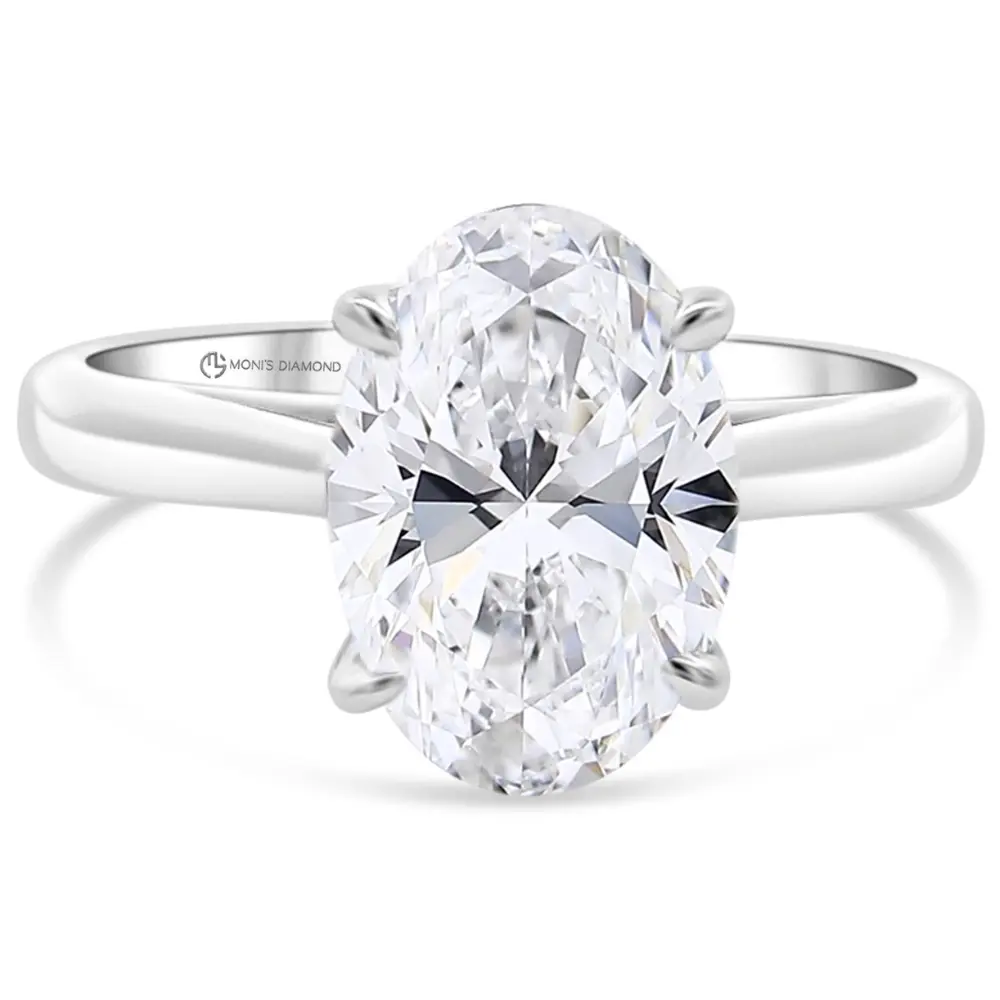
The oval cut diamond is one of the most sought-after shapes, blending the brilliant sparkle of a classic round diamond with a gracefully elongated silhouette. No wonder oval diamond engagement rings have become a favorite among brides worldwide — they flatter the hand by creating the illusion of longer, slender fingers, all while offering dazzling brilliance with every movement.
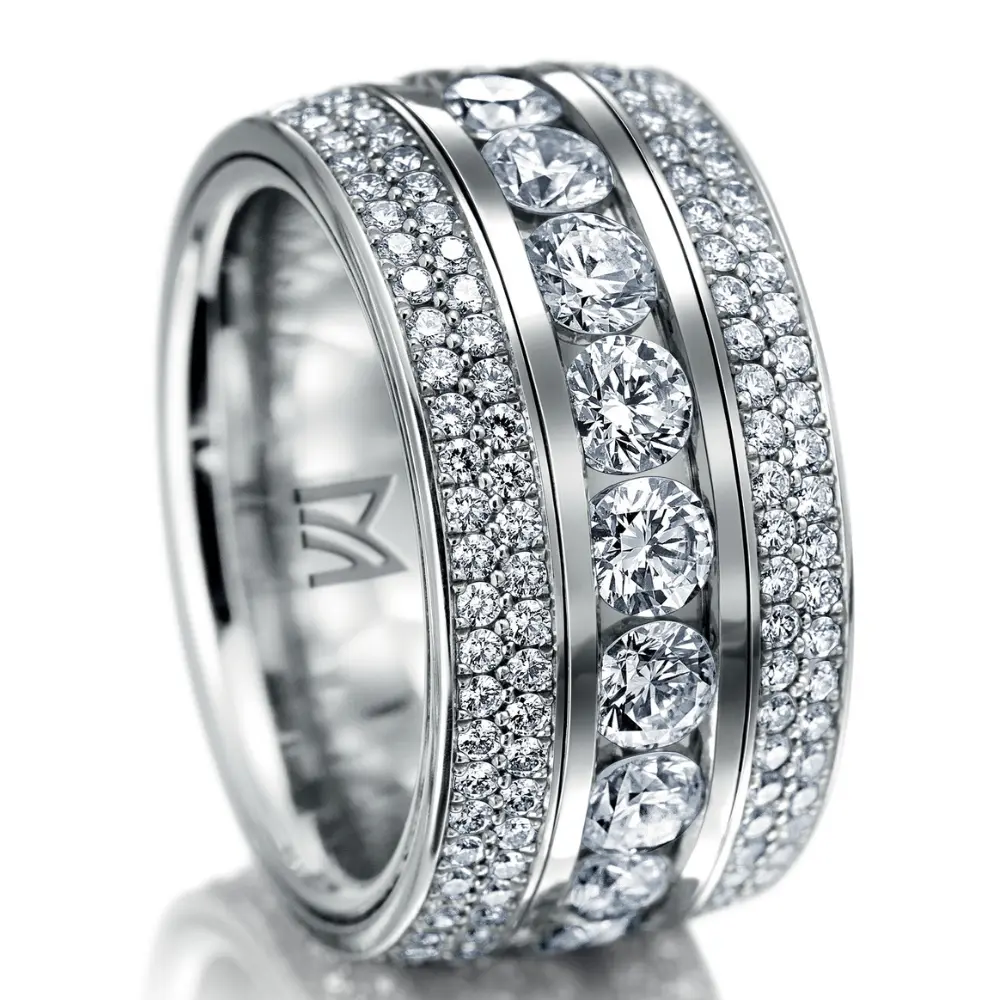
In the world of diamond jewelry, few innovations seamlessly blend masterful craftsmanship with modern design dynamics. The Meister Girello diamond ring is one such rarity—featuring a unique spinning mechanism that brings the brilliance of diamonds to life from every angle.

In our previous article, we explored in detail what diamond clarity truly means and why pursuing a “perfect” grading does not necessarily lead to the most beautiful result. When the choice moves toward a specific diamond engagement ring, however, the next step becomes unavoidable: understanding the international grading systems used to officially assess diamond clarity.
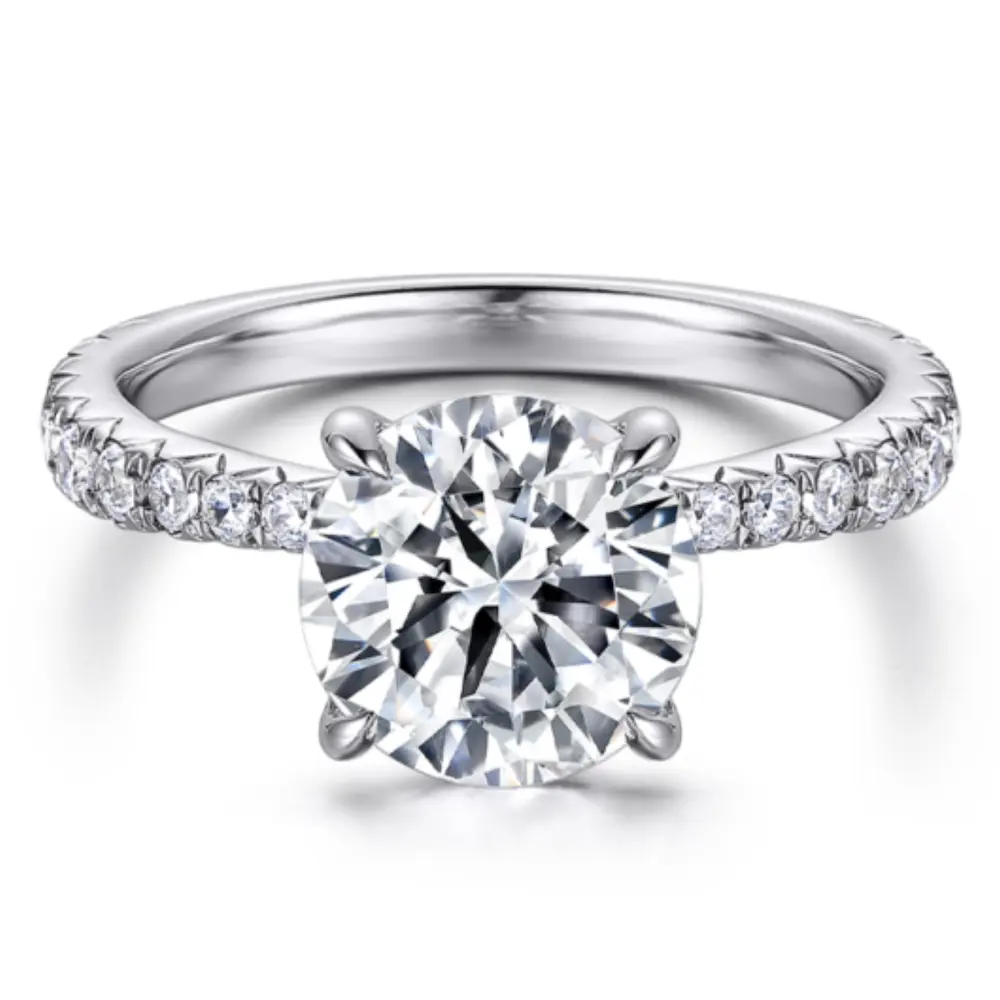
A diamond engagement ring is more than a gift: it’s a promise, a story, and a lifelong keepsake. When a diamond catches the light, it’s not only the stone that sparkles — it’s the emotion it carries. But how do you find the ring that truly stands the test of time? This guide answers every key question.
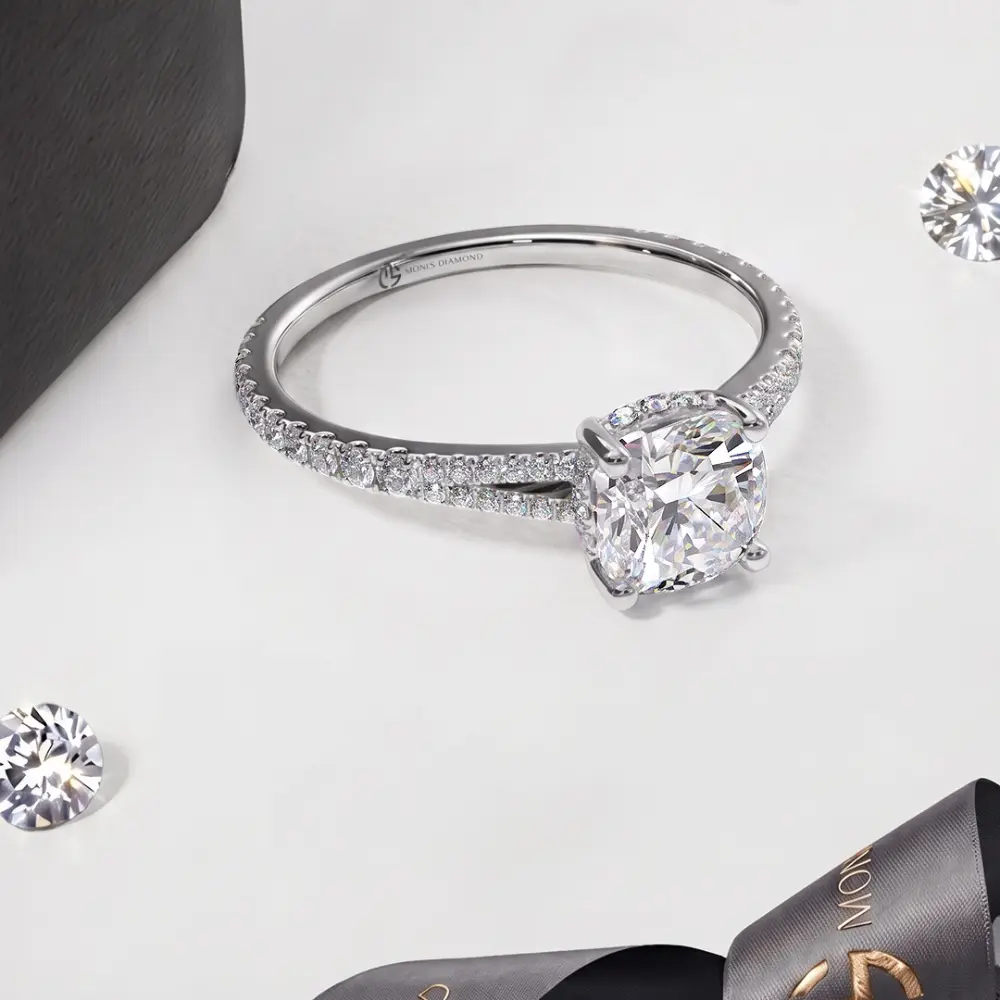
A cushion-cut diamond is instantly recognisable by its square or slightly rectangular shape, rounded corners and softly curved outline. Look a little closer, however, and the picture becomes far more complex. Two cushion-cut diamonds of the same carat weight can differ considerably in their proportions, light performance and overall character.
A diamond engagement ring is no longer just a classic piece of jewellery, it is a reflection of a personal story. In the world of luxury, a clear shift is taking place: instead of mass-produced designs, the focus is moving toward bespoke creations, designed specifically for the individual.