


Magazine
Diamond price calculator – what actually determines the price of a diamond?
The price list sets baseline price levels based on the 4Cs – carat, cut, color, and clarity. In reality, however, the market price often differs. Every diamond is unique, and subtle details, proportions, and overall visual appearance are just as important as the data stated on a certificate. Choosing a diamond is therefore not a purely mathematical exercise, but a decision that requires professional insight.
A diamond’s price cannot be defined by a single formula. While the trade does rely on a kind of “diamond price calculator” – the Rapaport price list used as an international benchmark – this is not an automated tool available to consumers, but rather a reference framework interpreted by professionals.
The price list sets baseline price levels based on the 4Cs – carat, cut, color, and clarity. In reality, however, the market price often differs. Every diamond is unique, and subtle details, proportions, and overall visual appearance are just as important as the data stated on a certificate. Choosing a diamond is therefore not a purely mathematical exercise, but a decision that requires professional insight.
The 4Cs as the foundation of any “diamond calculator”
The value of a diamond is assessed through the 4C system, an internationally accepted framework that allows for comparison. At the same time, it does not fully capture how a diamond actually looks in real life.
Carat
Carat refers to the weight of a diamond and has a direct impact on price. However, price does not increase linearly. Larger stones are significantly rarer, and their value rises disproportionately. A 1-carat diamond is not simply twice the price of a 0.50-carat stone, it is often considerably more.
Cut
Cut determines how light interacts with the diamond. Brilliance (white light return), fire (dispersion), and scintillation (sparkle) all depend on the quality of the cut. From a professional perspective, this is one of the most critical factors. A well-cut diamond can appear far more lively and radiant than a stone with higher color or clarity grades but weaker proportions.
Color
Diamond color refers to the absence of color. The D–F range is considered colorless, G–J near colorless, and further down the scale, warmer tones become more noticeable. These differences are often subtle and best seen in comparison, yet they can significantly affect price. Selecting the right color is not necessarily about choosing the highest grade, but about achieving a balanced and harmonious overall appearance.
Clarity
Diamond clarity describes the internal (inclusions) and external (blemishes) characteristics of a diamond. In most cases, these are not visible to the naked eye, especially in smaller stones. In practice, a diamond that appears “eye-clean” is often an ideal choice. The goal is not perfection on paper, but a stone whose inclusions do not affect its visual beauty.
The role of certification in a diamond’s value
A diamond’s price is also influenced by whether it is certified and by the credibility of the laboratory issuing the grading report. Certificates from internationally recognized, independent institutions — such as GIA or HRD — provide an objective assessment of the diamond’s key characteristics, including the 4Cs.
This is essential not only for comparability, but also because grading standards may vary between laboratories. A certified diamond is therefore more transparent, more reliable, and easier to evaluate over the long term.
In this sense, a certificate can be seen as the diamond’s “passport.” Without it, neither the true quality nor the fairness of the price can be assessed with confidence, making certification a fundamental requirement when buying a diamond.
Why calculation alone is not enough
While the 4C system provides a solid basis for comparison, it does not fully describe a diamond’s visual character. It does not reveal how light is distributed within the stone, how vivid its brilliance appears, how it performs under different lighting conditions, or how balanced its proportions are. This is why two diamonds with identical specifications on paper can look different in reality.
The price of a diamond engagement ring is more than the center stone
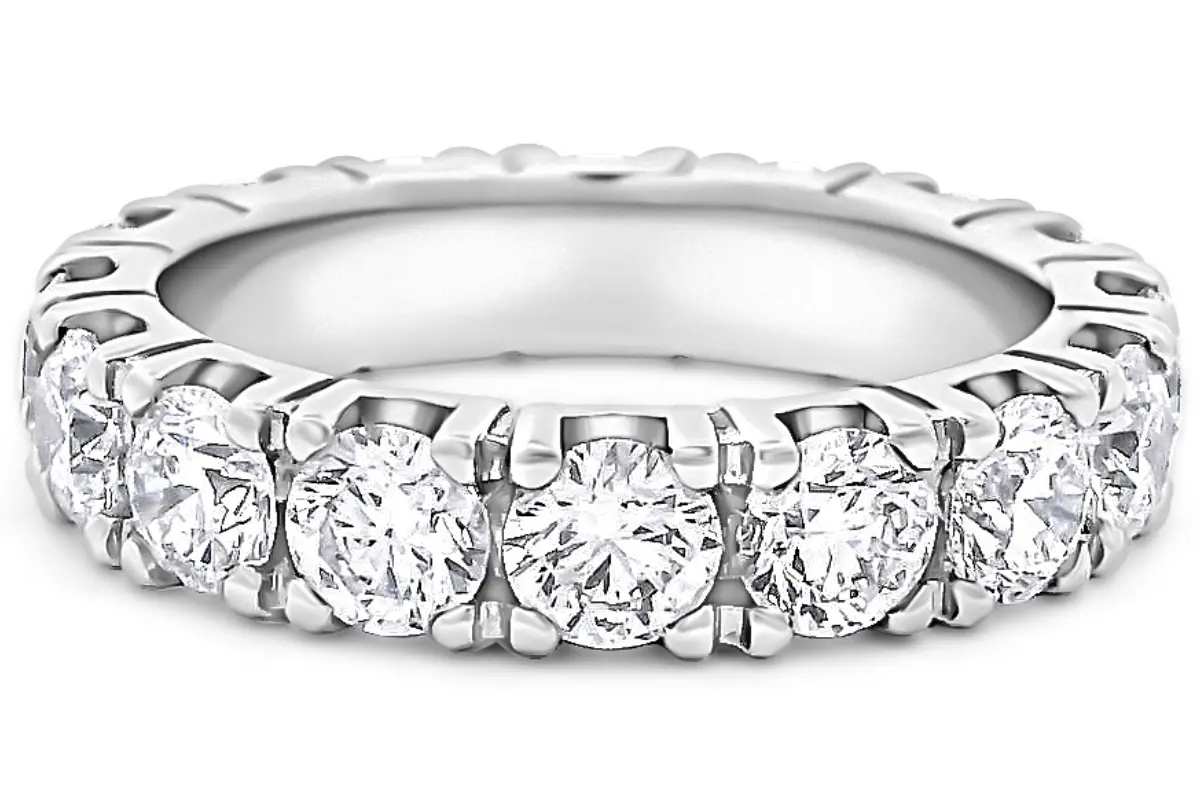
The final price of a diamond engagement ring is not determined solely by the center stone. Side stones, halo designs, or pavé-set diamonds also contribute to both the overall appearance and the price. While each individual stone may be smaller, their combined effect can be significant.
The setting style, the choice of metal — whether gold or platinum — and the quality of craftsmanship also play an important role. Precision and structural integrity are not only aesthetic considerations, but long-term value factors as well.
How to approach the idea of a diamond calculator
A diamond calculator can be a useful starting point, but it does not provide definitive answers. It helps frame price ranges, but cannot replace professional interpretation.
Ultimately, what matters is how the diamond performs in real life: how it interacts with light, how it appears to the eye, and how well it fits into the intended piece of jewelry.
What should you focus on when buying a diamond?
The value of a diamond does not come from maximizing a single parameter, but from achieving balance across all of them. A well-chosen diamond is not necessarily the highest-graded one, but the one that is visually convincing and remains harmonious over time.
Numbers can guide the process, but the final decision is always defined by what you see and how the diamond feels in its complete setting. A carefully selected diamond engagement ring is not only aesthetically refined, but a lasting expression of value.
Moni’s Diamond – premium engagement rings in Budapest and Balatonfüred
At Moni’s Diamond jewelry store, we bring over a decade of experience to help guide your decision, ensuring that the process is not only informed but genuinely enjoyable. In an exclusive setting, you can explore a curated selection of the highest quality international brands, supported by jewelry and diamond specialists throughout the entire process.
In the heart of Budapest, in our two-level jewelry house just steps from St. Stephen’s Basilica, in our Balatonfüred jewelry boutique along the Tagore promenade, and through our online store, we offer the opportunity to find a truly exceptional diamond engagement ring, one that will retain its meaning and brilliance for a lifetime.
(Image: Moni's Diamond)
APPOINTMENT BOOKING
Reserve your preferred time slot to enjoy a personalized and unforgettable jewelry design experience. Our experts will focus exclusively on you, ensuring every detail is perfect and every moment feels special.
Booking online: https://www.monis.hu/en/appointment-booking
Booking by phone: +36 70 427 0053

Located just a few steps from St. Stephen’s Basilica, Moni’s Diamond jewelry store welcomes those who are not simply looking for jewelry, but for meaning, emotion, and timeless value.

Diamond clarity is one of the most frequently mentioned and at the same time most misunderstood quality characteristics in the world of diamond engagement rings and fine diamond jewellery.

Diamond color is one of the defining elements of the 4Cs and has a direct impact on pricing. Diamonds in the D–F range are classified as colorless and are rarer, which places them in a higher price bracket. As one moves down the scale and a subtle yellow tint becomes present in the stone, prices generally decrease gradually.
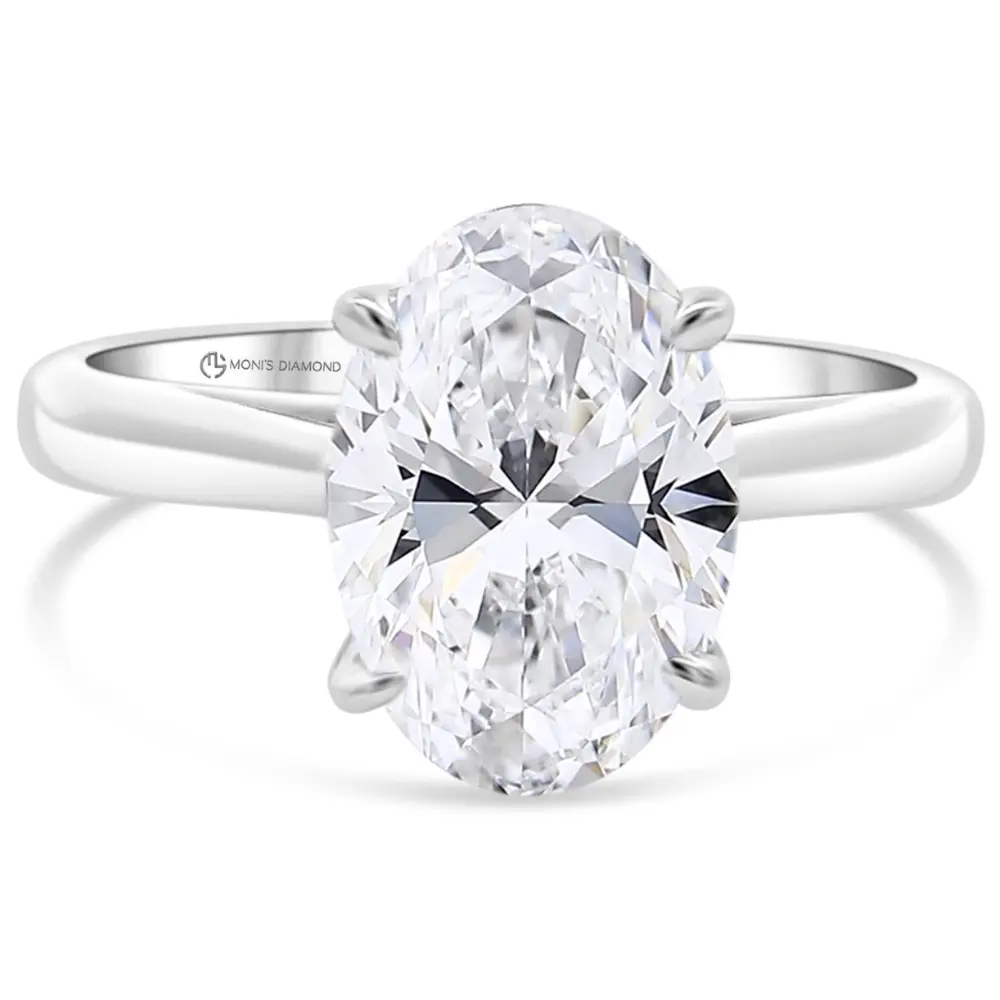
The oval cut diamond is one of the most sought-after shapes, blending the brilliant sparkle of a classic round diamond with a gracefully elongated silhouette. No wonder oval diamond engagement rings have become a favorite among brides worldwide — they flatter the hand by creating the illusion of longer, slender fingers, all while offering dazzling brilliance with every movement.

Choosing a diamond engagement ring is never purely an aesthetic decision. It is a piece of jewelry that carries emotional meaning, everyday functionality, and long-term value all at once. For this reason, the choice of precious metal is just as important as the diamond itself. White gold and platinum are the two most commonly chosen materials for premium engagement rings. While their appearance may seem similar at first glance, their properties reveal subtle yet professionally significant differences.
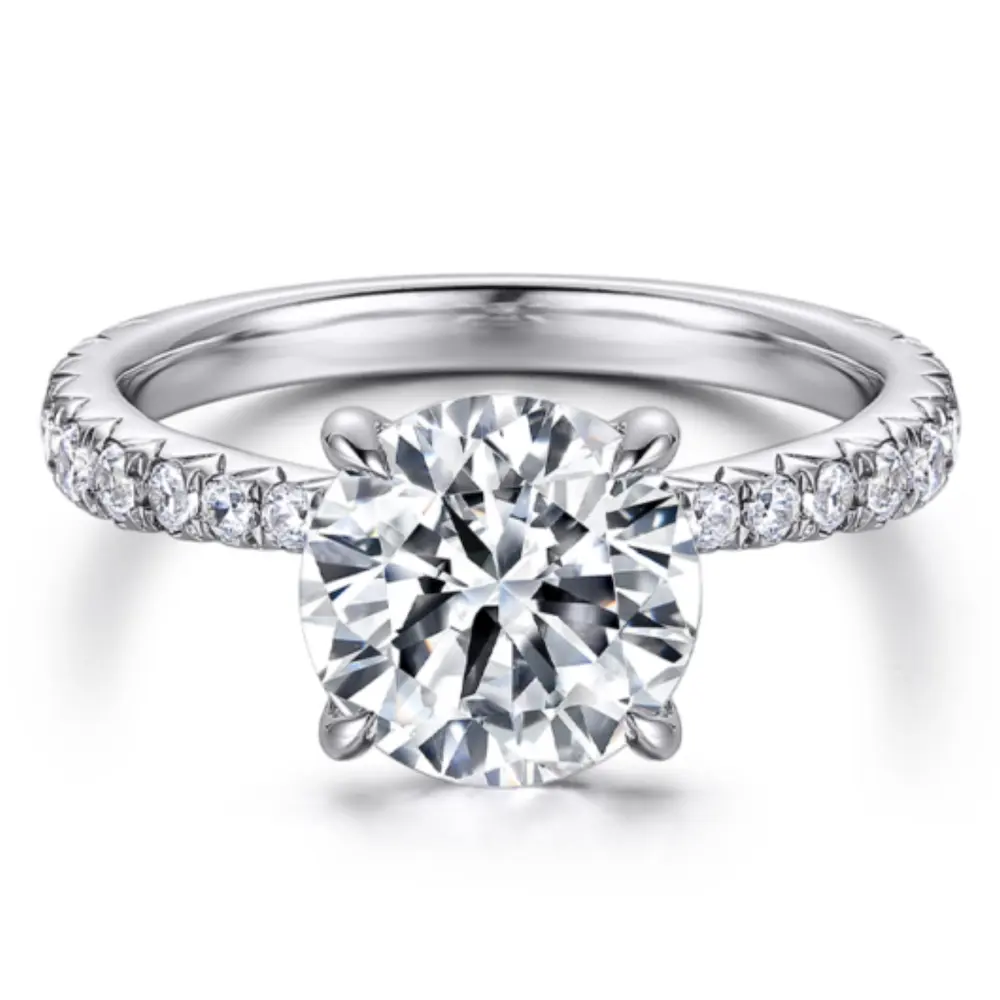
A diamond engagement ring is more than a gift: it’s a promise, a story, and a lifelong keepsake. When a diamond catches the light, it’s not only the stone that sparkles — it’s the emotion it carries. But how do you find the ring that truly stands the test of time? This guide answers every key question.

Among the many choices available, the 1-carat diamond stands out for good reason: it offers a refined yet striking presence, balancing understated elegance with radiant brilliance. This step-by-step guide, curated by the jewelry experts at Moni’s Diamond jewelry store, will walk you through every stage of the decision-making process — from selecting the ideal style to understanding diamond quality and certification.
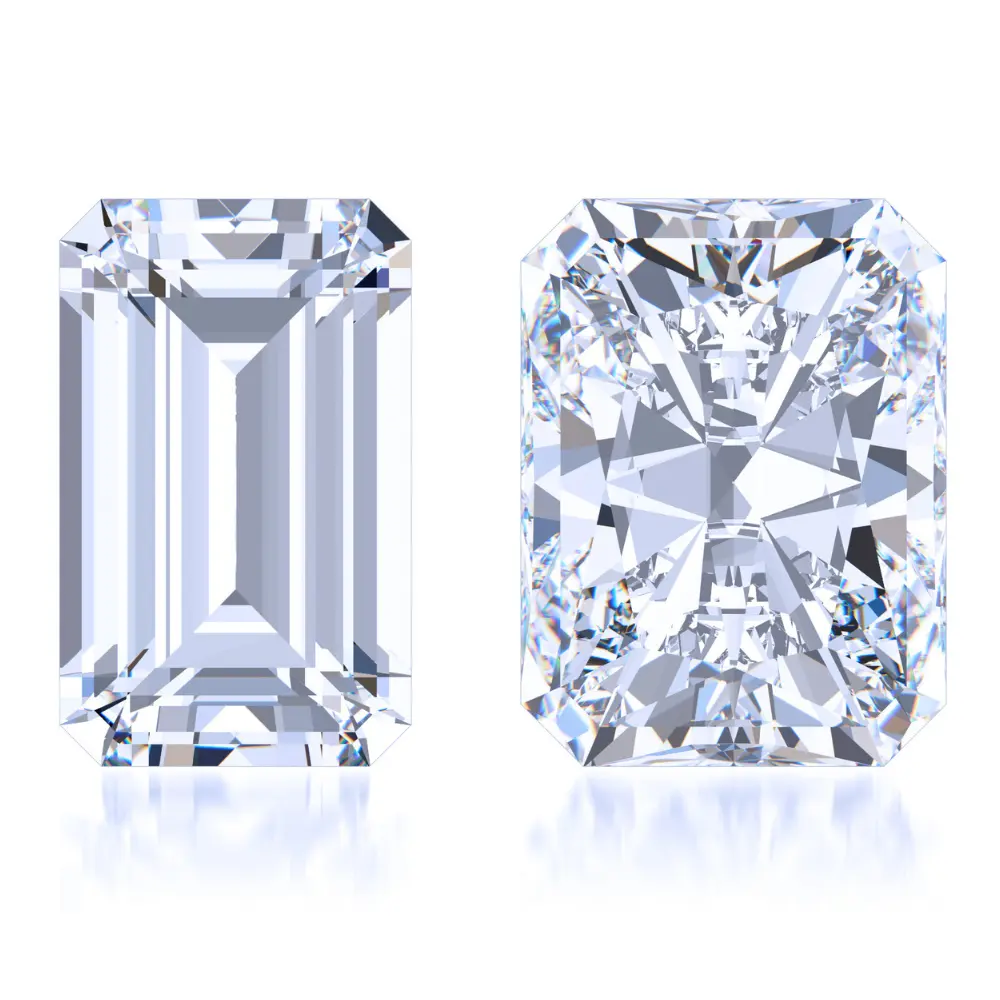
When choosing a diamond engagement ring, the diamond cut is far more than a question of shape. The cutting style determines how light travels through the stone, defines its character, and ultimately shapes the impression the ring conveys when worn. At first glance, emerald and radiant cuts may appear similar — both feature a rectangular outline with clean, refined lines — yet they create distinctly different visual experiences.