


Magazine
10 Things you should know about diamonds
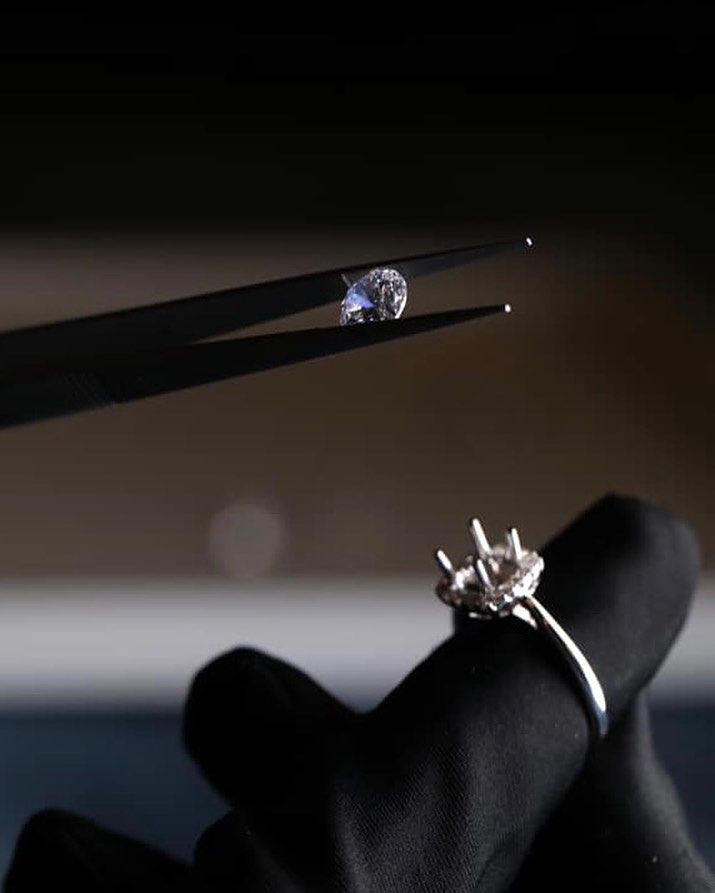
There are few natural wonders as captivating and complex as the diamond. Born deep within the Earth and gifted as one of the most intimate tokens of love, a diamond carries timeless symbolism — commitment, eternity, and enduring beauty — across centuries, cultures, and continents.
There are few natural wonders as captivating and complex as the diamond. Born deep within the Earth and gifted as one of the most intimate tokens of love, a diamond carries timeless symbolism — commitment, eternity, and enduring beauty — across centuries, cultures, and continents.
But while we admire its dazzling sparkle, how many of us truly understand what makes a diamond special? What determines its value, how does it form, and how can we tell if it’s real? With insights from Moni’s Diamond jewelry experts, here are ten essential facts every diamond lover should know.
1. Diamonds are the hardest natural gemstone on Earth
Composed of pure carbon atoms, diamonds are the hardest known material, ranking a perfect 10 on the Mohs scale of mineral hardness. For comparison, sapphires and rubies (corundum) score a 9 — yet a diamond is 140 times harder. This means that a diamond can only be cut by another diamond, and with proper care, it will never scratch or lose its shine. Its atomic structure forms a perfect tetrahedral crystal, giving natural diamonds their iconic faceted shape.
2. Unbreakable bonds
The word "diamond" comes from the Greek adamas, meaning “invincible.” It has long symbolized eternal love and unwavering commitment. The tradition of giving a diamond ring to express love dates back to the 15th century, while in ancient Greece, diamonds were believed to be “tears of the gods.” Today, diamonds remain one of the most popular choices for engagement rings and wedding bands.
3. Volcanic eruptions or meteorites bring diamonds to the surface
Diamonds form under extreme pressure and heat, more than 150 kilometers beneath the Earth’s surface. They are brought closer to the surface through volcanic activity or, less commonly, meteorite impacts. These events allow diamonds — created millions or even billions of years ago — to eventually be discovered and transformed into the brilliant jewels we cherish.
4. Diamond color affects its value
Diamonds occur naturally in a wide range of colors: yellow, brown, green, blue, purple, and even black. Colorless diamonds are the most highly prized, though so-called “fancy” diamonds — such as vivid pinks and blues — can be exceptionally valuable due to their rarity. Diamond color is commonly graded on a scale from D (colorless) to Z (light yellow or brown).
5. Carat refers to a diamond’s weight
Carat (ct) measures the diamond’s weight, not its size. One carat equals 0.2 grams, and it is subdivided into 100 points. So a 0.50 ct diamond may also be referred to as a “50-pointer.” Large, flawless diamonds over 10 carats are exceedingly rare — only a handful are discovered worldwide each year.
6. The secret to a diamond’s fire
“Fire” refers to a diamond’s ability to break white light into a rainbow of spectral colors. This breathtaking sparkle is achieved through precision cutting — modern round brilliant cuts feature 57 facets, expertly arranged to reflect and refract light to maximum effect. The result: a diamond that returns nearly 100% of the light it receives.
7. Diamonds are graded based on the 4Cs
Every diamond is assessed based on four key attributes, known as the 4Cs:
-
Cut – The shape, proportions, and symmetry, which influence brilliance
-
Carat – The weight of the stone
-
Clarity – The presence (or absence) of internal or surface imperfections
-
Color – The degree of colorlessness (or presence of hue in fancy diamonds)
These criteria together determine a diamond’s beauty, rarity, and value.
8. Certified diamonds come with official documentation
Every certified diamond should come with a grading report from a recognized gemological laboratory. This document confirms the stone’s 4C attributes and may include additional information like fluorescence, proportions, or internal features. At Moni’s Diamond jewelry store, all diamond jewelry is accompanied by an official certificate ensuring its authenticity and long-term value.
9. Not every diamond is flawless
Under 10x magnification, a gemologist can detect tiny inclusions or blemishes in most diamonds. Flawless diamonds are extremely rare. Imperfections may appear as internal crystals, tiny fractures (feathers), or surface abrasions. While minor inclusions do not necessarily affect a diamond’s brilliance, they do influence its clarity grade and value.
10. There are ways to spot a fake diamond
Diamonds are excellent heat conductors — six times more efficient than copper. This property is used to identify genuine stones. Other methods include the fog test (a real diamond disperses breath immediately), fluorescence under UV light, and the newspaper test—if you can read print through the stone, it’s not a real diamond.
At Moni’s Diamond jewelry store, every piece of jewelry comes with expert guidance and certified quality. Our experienced gemologists help you find a diamond that not only shines brilliantly but also tells your unique story.
APPOINTMENT BOOKING
Reserve your preferred time slot to enjoy a personalized and unforgettable jewelry design experience. Our experts will focus exclusively on you, ensuring every detail is perfect and every moment feels special.
Booking online: https://www.monis.hu/en/appointment-booking
Booking by phone: +36 70 427 0053