


Magazine
10 Fascinating facts about diamonds you’ll want to know
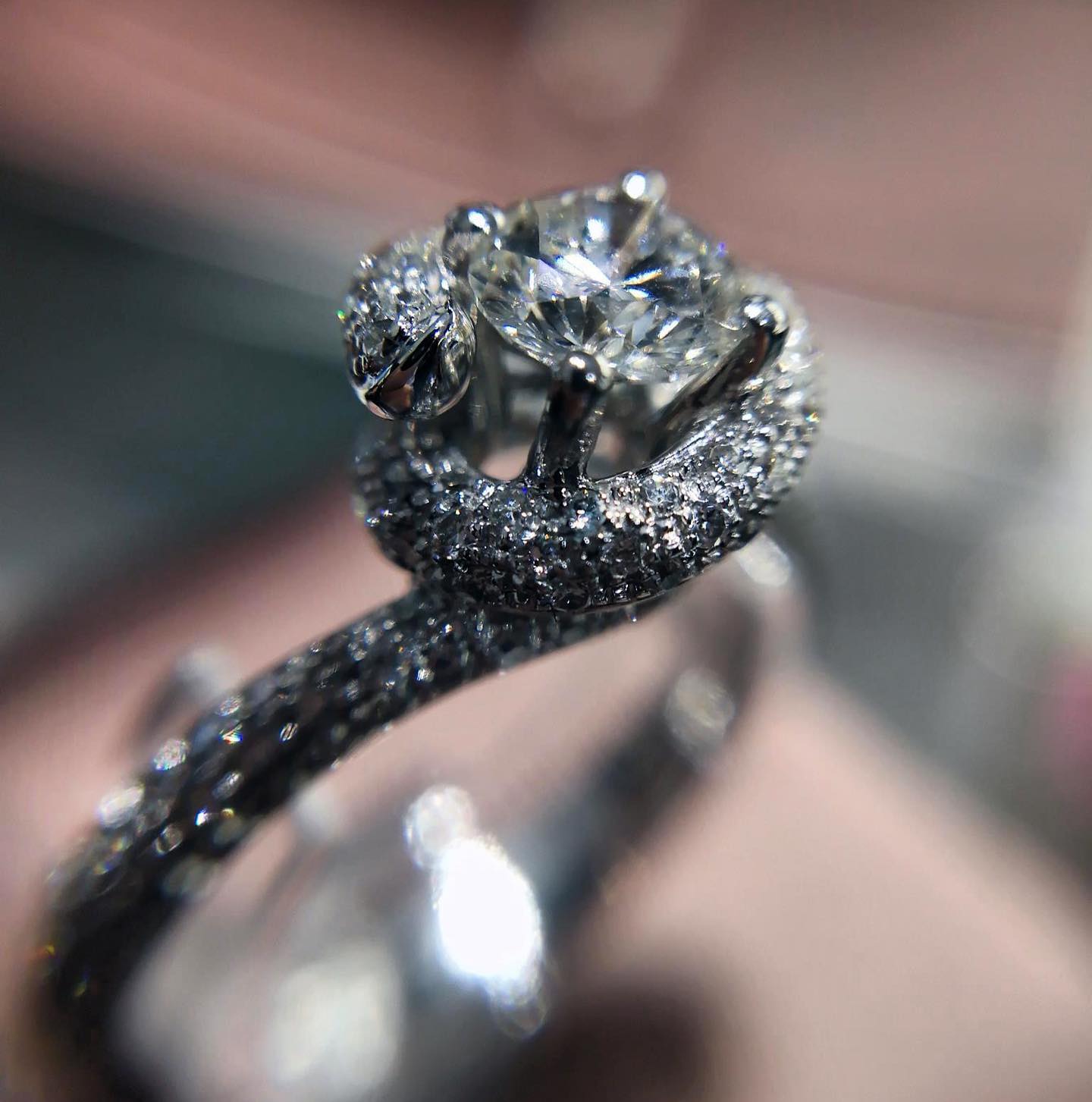
A single diamond ring can mark a moment that lasts a lifetime. And while its beauty is undeniable, a diamond’s true value also lies in the knowledge behind it. What makes a diamond truly precious? Why do clarity, color, and cut matter? And how can you be sure your stone is genuine?
Few things carry the weight of time with such elegance as a diamond. Formed over billions of years deep beneath the Earth’s surface, its unmatched brilliance, clarity, and hardness have made it one of nature’s most extraordinary creations. But beyond its dazzling appearance, a diamond’s true power lies in what it represents: feelings, promises, and memories preserved in stone.
A single diamond ring can mark a moment that lasts a lifetime. And while its beauty is undeniable, a diamond’s true value also lies in the knowledge behind it. What makes a diamond truly precious? Why do clarity, color, and cut matter? And how can you be sure your stone is genuine?
With insights from the experts at Moni’s Diamond jewelry store in Budapest and Balatonfüred, here are 10 essential things every diamond lover should know.
1. Diamonds are the hardest gemstones on Earth
Made entirely of carbon atoms, diamonds rank 10 out of 10 on the Mohs hardness scale — the highest possible score. They don’t scratch or wear down easily, making them perfect for daily wear. A well-cared-for diamond ring will keep its sparkle for a lifetime. In its purest form, a diamond contains only carbon — no other element is present.
2. Diamonds symbolize eternal love
The word “diamond” comes from the Greek adamas, meaning unconquerable. Gifting diamonds dates back to the 15th century, and ever since, they’ve symbolized eternal love and commitment. In ancient Greece, diamonds were believed to be tears of the gods, fallen to Earth.
3. Diamonds reach the surface through volcanic activity
Diamonds form under intense pressure and heat — over 150 kilometers below the Earth's surface, at temperatures exceeding 1,000°C. They travel toward the surface through volcanic eruptions and the movement of magma. Fun fact: In rare cases, diamond formation can also occur as a result of meteorite impact.
4. Color plays a big role in a diamond’s value
Diamonds appear in a range of natural colors, including brown, blue, green, purple, and black. But when it comes to value, the less color, the better: colorless diamonds are the most highly prized. The industry-standard color scale starts at “D” for the most colorless stones. That said, rare fancy-colored diamonds — like blue or pink diamonds — can be extremely valuable as well.
5. Carat measures weight, not size
The term carat refers to a diamond’s weight, not its physical dimensions. One carat (1 ct) equals 0.20 grams. Precision matters — a diamond’s weight is measured to the thousandth, and only rounded up if the third digit is 9. On certificates, weight is listed to two decimal places. Interesting fact: a single colored diamond over 10 carats is so rare, only about one appears each year worldwide.
6. A diamond’s fire comes from light dispersion
A flawless, transparent diamond splits and reflects all the colors of the spectrum — a phenomenon known as fire. This is thanks to its high refractive index. When cut to perfection (typically with 57 facets), the light reflects internally, creating maximum brilliance. A well-cut brilliant-cut diamond can reflect up to 100% of the light it receives.
7. Diamonds are evaluated using the 4Cs
Every diamond is graded based on four essential characteristics—known as the 4Cs:
- Cut
- Carat weight
- Clarity
- Color
These factors play a major role in a diamond’s quality, beauty, and price.
8. Every diamond should have a certificate
Authentic diamonds are accompanied by an official certificate issued by a trusted gemological institute. In addition to the 4Cs, the certificate may include details about the diamond’s dimensions, fluorescence, and a mapping of its internal and external inclusions. Each certificate is marked with a signature, date, and verification stamp to guarantee authenticity and quality.
9. Even diamonds can have imperfections
Clarity is assessed under 10x magnification using a jeweler’s loupe. Most diamonds have natural inclusions — tiny imperfections that can affect clarity and sometimes color. Flawless diamonds, both internally and externally, are incredibly rare and therefore especially valuable.
10. Diamonds can be tested in surprising ways
There are several ways to verify whether a diamond is genuine:
- Thermal conductivity: Diamonds conduct heat six times better than copper.
- X-ray fluorescence: Real diamonds glow under X-ray light in various colors.
- Fog test: Breathe on the stone—if it clears instantly, it's a diamond. If fog lingers, it’s likely a fake.
- Newspaper test: Place a loose stone upside down on text. If you can read the print, the stone is likely fake. A real diamond distorts and scatters light, making the text unreadable.
Discover the value behind the sparkle
At Moni’s Diamond jewelry store, every diamond jewelry piece comes with an internationally recognized certificate confirming its origin, quality, and authenticity. And our experienced gemologists are always here to help you navigate the world of diamonds — so the piece you choose is not only beautiful, but truly worthy of you.
Because behind every diamond is more than light — it’s a story that lasts forever.
APPOINTMENT BOOKING
Reserve your preferred time slot to enjoy a personalized and unforgettable jewelry design experience. Our experts will focus exclusively on you, ensuring every detail is perfect and every moment feels special.
Booking online: https://www.monis.hu/en/appointment-booking
Booking by phone: +36 70 427 0053